Alumnae Theatre Company
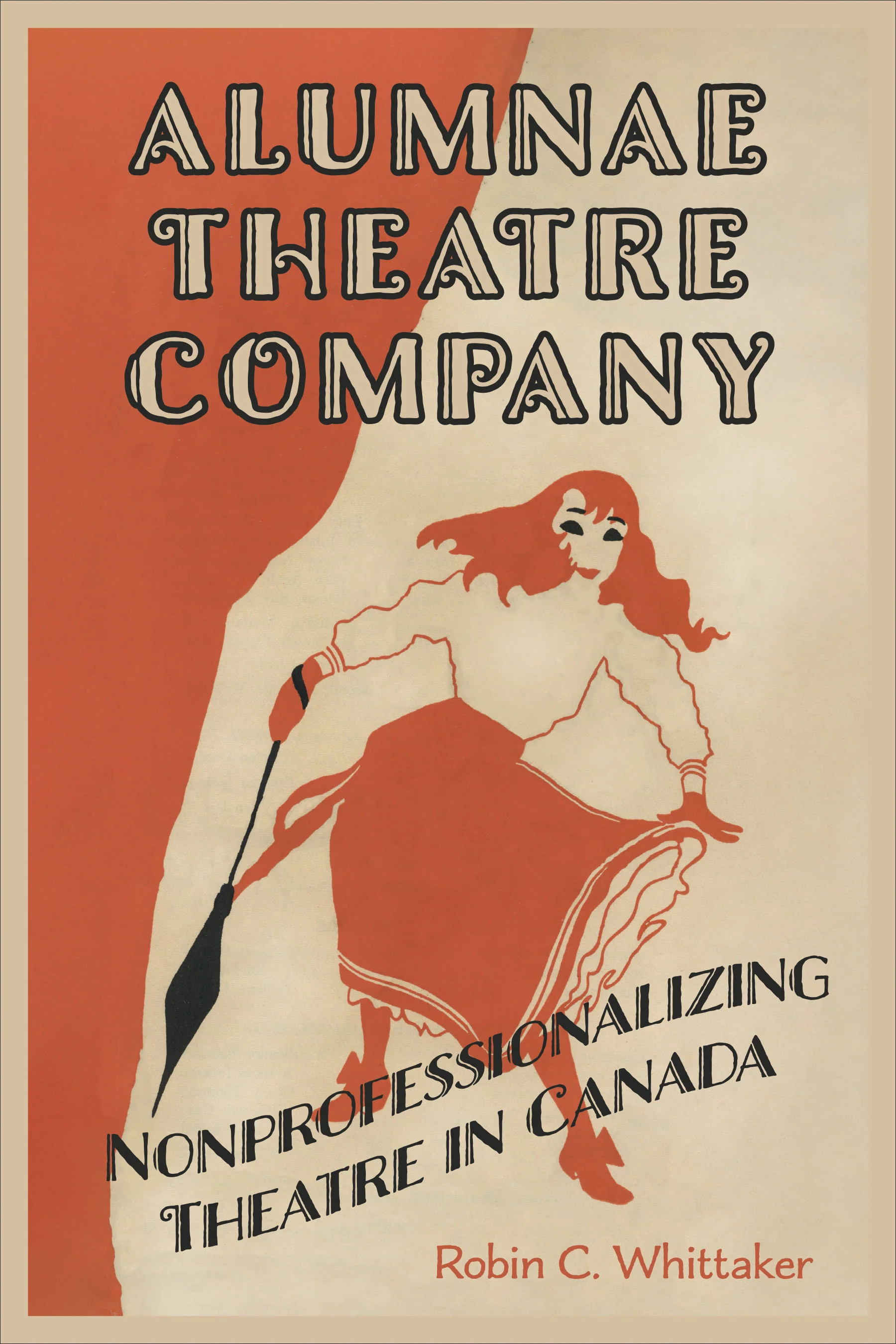
Delving into previously untapped archival resources, Alumnae Theatre Company traces the history and ongoing impact of North America’s longest-running women-led theatre group, Toronto’s Alumnae Theatre Company. The book illuminates the essential yet downplayed relationships between professional and nonprofessionalizing theatre practices, drawing on primary and secondary sources that have contributed to the practice and scholarship of theatre since the early twentieth century. It uses Alumnae as a case study for recognizing female leadership roles that support the development of theatre artists in Canada.
The book considers Alumnae’s historical influences on university philanthropy, intellectual modernism, and Toronto’s expanding theatre ecology. It revisits past eras to focus on four dominant perspectives: theatre spaces, festival competition, new play production, and nonprofessionalizing theatre’s relationship to an emerging profession. The book tethers Alumnae’s alterity to contemporary critical notions of the nonprofessionalizing theatre practitioner as counter-culture revolutionary. It urges scholars and practitioners alike to not take for granted the values and possibilities of contemporary nonprofessionalizing theatre practices. Alumnae Theatre Company also serves as a fascinating history of Toronto through the eyes of its oldest active theatre company.
Original: $85.43
-65%$85.43
$29.90Product Information
Product Information
Shipping & Returns
Shipping & Returns
Description
Delving into previously untapped archival resources, Alumnae Theatre Company traces the history and ongoing impact of North America’s longest-running women-led theatre group, Toronto’s Alumnae Theatre Company. The book illuminates the essential yet downplayed relationships between professional and nonprofessionalizing theatre practices, drawing on primary and secondary sources that have contributed to the practice and scholarship of theatre since the early twentieth century. It uses Alumnae as a case study for recognizing female leadership roles that support the development of theatre artists in Canada.
The book considers Alumnae’s historical influences on university philanthropy, intellectual modernism, and Toronto’s expanding theatre ecology. It revisits past eras to focus on four dominant perspectives: theatre spaces, festival competition, new play production, and nonprofessionalizing theatre’s relationship to an emerging profession. The book tethers Alumnae’s alterity to contemporary critical notions of the nonprofessionalizing theatre practitioner as counter-culture revolutionary. It urges scholars and practitioners alike to not take for granted the values and possibilities of contemporary nonprofessionalizing theatre practices. Alumnae Theatre Company also serves as a fascinating history of Toronto through the eyes of its oldest active theatre company.